
Every exercise on the T3 Simulator is open at any hour, with unlimited retries and no slot to book. That is not news. It is the thing the rest of the platform is built on, and it is worth saying plainly every so often.
So this one is not an announcement. It is an argument about why the platform is shaped the way it is.
The slot is the constraint
Ask what limits how many controllers an organisation can train and the answer is rarely the number of people who want the job. It is the hours available in the rooms where practice happens, divided by the students who need them.
That division is the planning problem in its entirety. Intake size, course length and the length of the waiting list all fall out of it. It is also why a student who wants a fourth run at an approach usually does not get one: the fourth run costs the room exactly what the first one did, and the room is spoken for.
Nobody chose this. It is simply what happens when practice needs a building.
What changes when it does not
A student with a free hour at midnight has an hour of practice. A student who wants a fourth run takes the fourth run. Nothing has to be released and nobody has to unlock anything.
The second effect is the more interesting one. When practice is rationed, a student spends part of it deciding what to practise, because choosing wrong is expensive. When it is not rationed, they go at the thing they are worst at, because trying it and failing costs them the run and nothing else.
That is a different learning behaviour, and it is the one everybody says they want from students. It is a hard thing to ask for while the room has a diary.
This is not an argument against rooms
Lektor owns a full simulator. Rooms are where the standard lives, and there is a good reason the last steps of controller training happen in one.
The claim here is narrower, and it is about sequence. By the time a student walks into the room they should have run the thing many times over already. The room is for the part only the room can do, and spending it on repetitions a browser could have absorbed is the waste worth removing.
What a training manager actually gets
Not a claim about how hard students work. The record.
A run made at any hour arrives in progress data with its score, per student and per exercise. Readiness is then read off what students did, rather than off what the timetable allowed them to do.
That is a more useful number to plan with, because it answers a different question. Not how many hours you were able to give a student, but how many runs the student took.
What this does not solve
Access is not instruction. A student left alone with unlimited runs and no guidance will practise the wrong thing enthusiastically, and quite a few of them will practise it into a habit that is then harder to remove than it would have been to prevent.
That is what instructors are for, and it is why the platform records what it records. The runs are visible so that somebody can look at a student who is going in circles and intervene, which is a job for a person and always will be.
The argument is only about what the constraint should be. If a student is limited by what an instructor can usefully give them, that is training. If they are limited by when a room is free, that is administration, and it has been setting the pace for a long time.
More from Lektor

The Assessor refresher opens again.
It runs remotely with an instructor, and it starts when your assessor is ready rather than on a date somebody else picked.

The exercise gets a grade too.
Manager Tools now reads progress data by exercise as well as by student, so a wall a whole intake keeps hitting shows up as a wall.
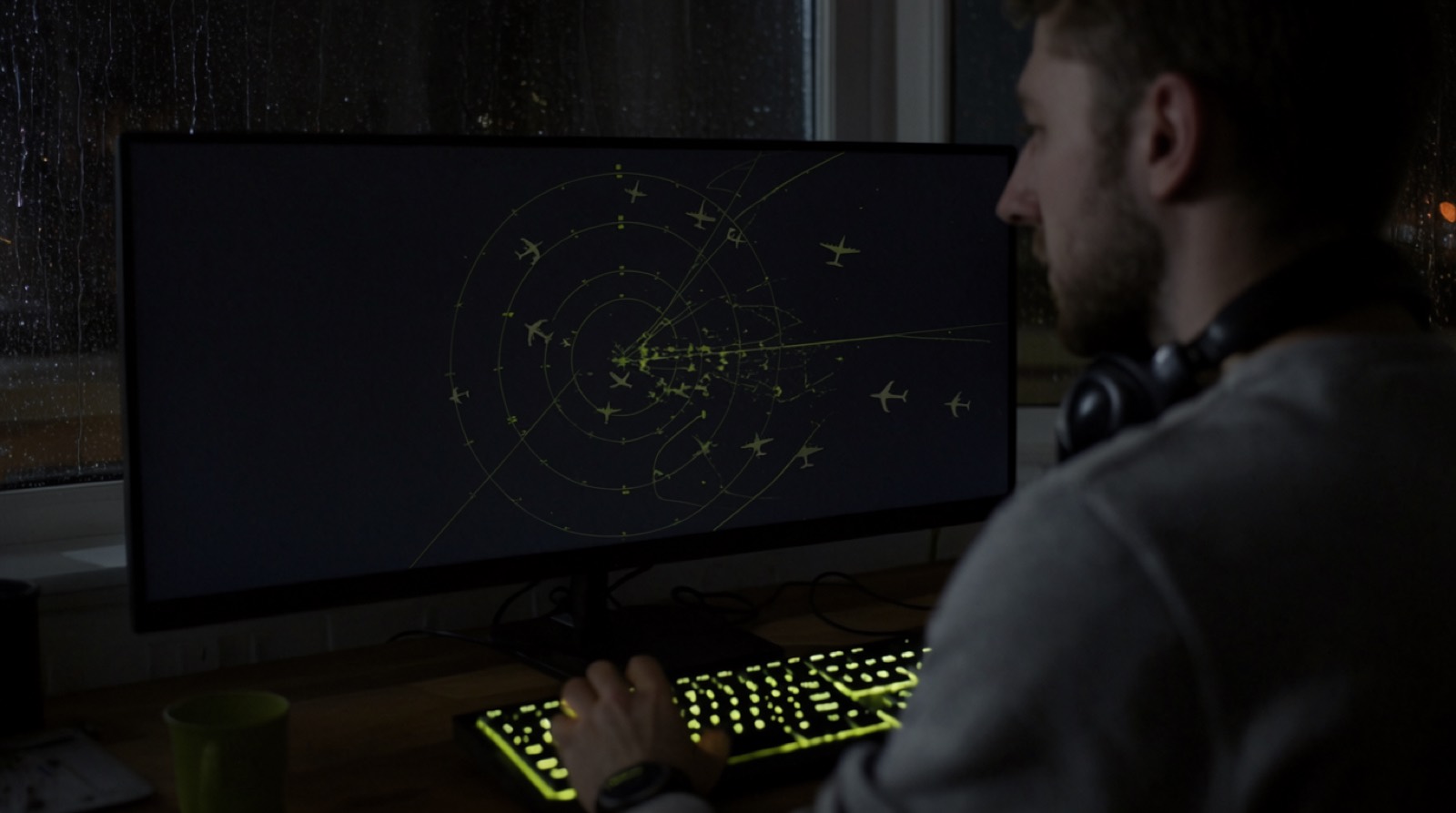
Surveillance exercises land on the T3 Simulator.
A new set of surveillance control exercises is live for Takeoff Games students, with the same unlimited retries as everything else on the platform.